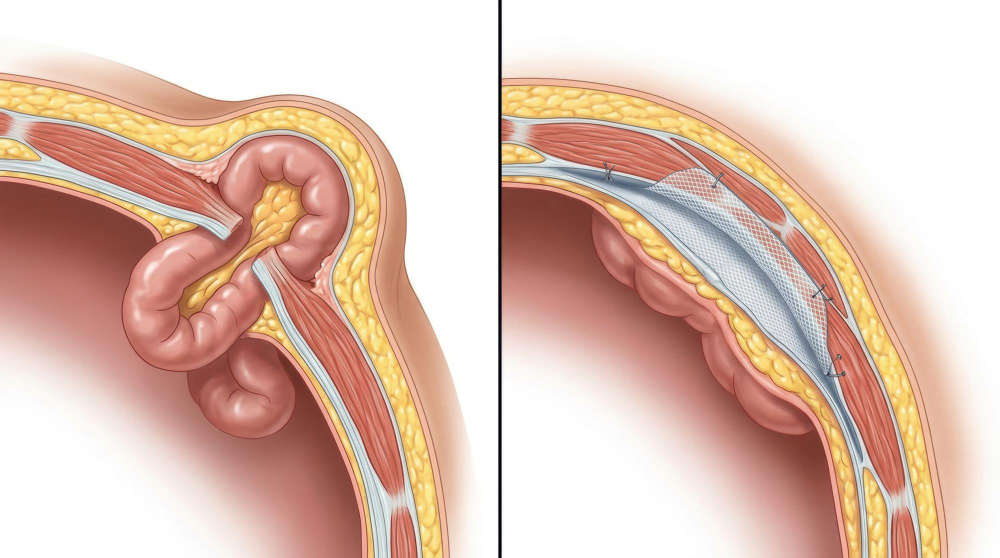
What Is a Hernia?
A hernia happens when an organ or tissue pushes through a weak spot in the muscle or tissue wall. Usually, hernias form in the belly area. However, they can also appear in other parts of the body. Many people ask about the difference between inguinal vs umbilical hernia. Both are common types, but they affect different areas and have unique features.
What Is an Inguinal Hernia?
An inguinal hernia forms in the groin area. This is where the lower belly meets the upper thigh. In fact, this type is the most common hernia in both men and women. With an inguinal hernia, part of the intestine or fat pushes through a weak spot in the lower belly wall. Often, you may notice a bulge in your groin. Sometimes, this bulge may hurt, especially when you cough or lift something heavy.
What Is an Umbilical Hernia?
An umbilical hernia appears near the belly button. In this case, part of the intestine or fat pushes through the muscle around the navel. While this type is common in babies, adults can get it too. Usually, you will see a soft bulge near your belly button. Sometimes, the bulge gets bigger when you laugh, cry, or strain.
Key Differences Between Inguinal and Umbilical Hernias
Although both types are hernias, they have some key differences. For example:
Symptoms of Each Type
Both types share some symptoms, but there are differences. For inguinal hernia symptoms, you may notice:
For umbilical hernia symptoms, you might see:
Causes and Risk Factors
Many things can cause hernias. However, each type has its own risk factors. For inguinal hernias, common causes include:
For umbilical hernias, causes and risks include:
Diagnosis Methods
Doctors use several ways to diagnose hernias. First, they will ask about your symptoms. Next, they will check for a bulge during a physical exam. Sometimes, they may use imaging tests for hernia diagnosis. These can include:
These tests help confirm the type and size of the hernia. They also show if any tissue is trapped or at risk.
Treatment Options
Treatment depends on the type and size of the hernia. For small hernias with mild symptoms, doctors may suggest watchful waiting. However, most hernias need surgery to prevent problems. Inguinal hernia treatment and umbilical hernia treatment can include:
After surgery, most people recover well. However, it is important to follow your doctor’s advice for a safe recovery.
Prevention Tips
While not all hernias can be prevented, you can lower your risk. For hernia prevention, try these tips:
By following these steps, you can help protect your belly wall and lower your chance of getting a hernia.
Conclusion
If you notice a bulge or have hernia symptoms, do not wait. Book a consultation with Dr. Shameem Muhammad to get expert advice and care for your needs.